






Case Study
HR Strategy Transformation through Comprehensive Talent Mapping
RS Borromeus Bandung
Company Profile
RS Borromeus is a reputable healthcare institution established in 1926, and has become one of the most prominent hospitals in Bandung. The hospital provides a full range of specialist medical services, a 24-hour emergency unit, and modern inpatient facilities supported by advanced medical technology.
Background & Challenges
As a large organization with hundreds of employees from diverse backgrounds — medical, support, and non-medical — RS Borromeus faces operational complexity and intense industry competition. The hospital needed a systematic approach to manage talent, identify future leaders, and ensure the right person is placed in the right role.
The Plan (Project Target)
- Conduct objective mapping of both hard skills and soft skills.
- Identify high-potential employees for leadership pipelines.
- Align competencies with the hospital’s vision and core values.
The Approach (Metodologi)
AND Learning & Coaching implemented a multi-method assessment approach across all employee levels, including:
- Technology-Based Assessments: Psychometric Tests, Cognitive Ability Tests, and Job Quest.
- Behavioral Event Interviews: Structured interviews exploring real past experiences.
- Focus Group Discussion (FGD): Understanding team dynamics and operational challenges.
The Results
The project successfully produced an accurate Human Capital Strength Map, serving as a foundation for career development, succession planning, and overall organizational performance enhancement.

Case Study
HR Transformation Initiative: Building an Excellent & Humane Charitas Hospital.
Charitas Hospital Palembang
Background & Challenges
The healthcare industry is evolving rapidly. Charitas Hospital faces key challenges including performance variation across units, suboptimal communication, a sense of stagnation among employees, and slow responsiveness to change. While technological investment continues to grow, it must be balanced with the development of human capital as the true driver of transformation.
The Plan (Proposed Solution)
To establish a sustainable HR foundation through a 36-Competency Framework built on four pillars: Operational Excellence, Service Excellence, Collaborative Excellence, and Strategic Excellence.
The Approach
To create a Human Excellence Ecosystem—a culture where potential is valued, growth is nurtured, systems guide performance, and positive relationships are strengthened. This will be achieved through a 6-month Quick Wins Action Plan:
- Months 1-2: Vision Alignment and Initial Mapping.
- Months 3-4: Pilot Project (Manager Coaching and Frontline Training).
- Months 5-6: Initial Integration into Performance Evaluation.
The Results (Expected ROI)
- Service Quality: ↑ Improved Customer Satisfaction & Reputation.
- Patient Safety: ↓ Reduced Risk & Unnecessary Costs.
- Operational Efficiency: ↑ Higher Productivity, ↓ Shorter Waiting Time.
- Employer Branding: ↓ Lower Employee Turnover.

Case Study
Building a Resilient Leadership Pipeline through Comprehensive Assessment
KB Bank
Company Profile
KB Bank is one of Indonesia’s leading financial institutions with an extensive national network, serving millions of corporate, commercial, and retail customers through a strong commitment to innovative banking services.
Background & Challenges
Amid rapid digital disruption, KB Bank needed to ensure that leaders at all levels — from Department Heads to Regional Heads — possess not only conventional banking competencies but also digital leadership, data analytics, and innovation capabilities to sustain transformation.
The Plan (Sasaran Project)
- Evaluate core leadership competencies.
- Develop an effective succession planning framework.
- Promote agile leadership behavior.
- Align talent capabilities with the bank’s digital transformation strategy (2023–2025+).
The Approach
Implemented a multi-dimensional Assessment Center methodology specifically tailored for the banking sector, conducted progressively from 2022 to 2025. The tools and exercises included: Computer-Based Business Simulation, In-Basket Exercise, Direct Interaction Role-Play.
The Results
- Established a Leadership Dashboard and comprehensive competency mapping.
- Identified High-Potential Leaders for acceleration programs.
- Developed a data-driven Succession Map covering 80% of critical positions.
- Strengthened a culture of adaptive leadership and coaching-based feedback.

Case Study
Performance Acceleration & Innovation through Intensive Upskilling Program
Minamas
Company Profile
Minamas is one of Indonesia’s leading palm oil plantation and manufacturing companies, operating an integrated business model that covers plantations, CPO mills, and refinery facilities.
Background & Challenges
Facing commodity price fluctuations and increasing global sustainability demands, Minamas recognized the need to equip its core workforce with 21st-century skills to drive organizational efficiency and agility.
The Plan (Sasaran Pelatihan)
To conduct a 3-Day Intensive Upskilling Program (9 batches throughout 2024) targeting Supervisors and Officers, focusing on: Mindset Transformation (Growth Mindset), Productivity Enhancement, Foundational Leadership, Operational Financial Literacy, Problem Solving.
The Approach
An integrated Experiential Learning approach combining:
- Gamification & Business Simulation.
- Real Case Studies from participants’ work units.
- Action Learning Sets (collaborative group discussions).
- Personal Action Plan design for the next 30 days.
The Results
- 27% improvement in mastery of five core competencies.
- 75% of Personal Action Plans successfully implemented in the field.
- Strengthened cross-unit collaboration between Head Office and Operations.
- Up to 15% efficiency improvement in targeted operational areas.

Case Study
Development of a Comprehensive Competency Model (2019–2020)
PT Cussons Indonesia
Company Profile
PT Cussons Indonesia is part of PZ Cussons Plc, a multinational company operating in four major global markets, including Indonesia. The company focuses on sustainable consumer goods that cater to daily household needs.
Background & Challenges
The period of 2019–2020 was marked by dynamic shifts and dramatic changes in consumer behavior, further accelerated by the COVID-19 pandemic. The company underwent a strategic transformation to become a simpler and more sustainable business, requiring a high level of adaptability and change management from all employees.
The Plan (Sasaran Project)
To develop a global competency model customized for the Southeast Asian market as a primary reference for the HR function:
- Identification of Core Competencies: Aligning with company values and culture.
- Functional Competency Adaptation: Tailored to market dynamics and technological trends.
- Global Standardization: Integrated into the corporate HR management system.
The Approach (Metodologi)
AND-LC designed the competency model based on psychological research and organizational analysis through the following steps:
- Critical Job Analysis: Identifying key skills and behaviors essential for business transformation across departments.
- Framework Development: Structuring core, functional, and leadership competencies.
- Validation & Integration: Engaging key stakeholders and embedding the model into all HR processes (recruitment, performance, and training).
The Results
- Strategic Impact: The model became the foundation of HR initiatives, mapping skill gaps caused by the pandemic and improving recruitment accuracy.
- Operational Impact: Training programs became more targeted, while performance evaluations became more objective and transparent.
- Digital Readiness: Ensured the workforce was equipped to support a more agile and digitally oriented business strategy.

Case study
Cultural Mapping and Large-Scale Employee Engagement Survey (EES)
PT Wijaya Karya (Persero) Tbk (WIKA Group)
Company Profile
PT Wijaya Karya (Persero) Tbk (WIKA Group) is one of Indonesia’s leading state-owned enterprises in the construction and infrastructure sector. With a massive project portfolio spanning across the archipelago, WIKA operates through thousands of high-performing talents driving its national-scale impact.
Background & Challenges
Amid dynamic business challenges, WIKA’s biggest priority is to ensure cultural alignment and maintain a solid level of employee engagement. The company required a large-scale cultural mapping initiative supported by a seamless distribution system to achieve high participation rates—from head office employees to those working at remote project sites.
The Plan (Sasaran Project)
- Massive Distribution: Deploy the survey to thousands of employees with zero technical barriers.
- Deep Analysis: Map cultural strengths and identify strategic gaps in talent retention.
- Data-Based Recommendations: Develop a tangible HR roadmap to bridge organizational gaps.
The Approach (Metodologi)
AND-LC combined its HR Consulting expertise with advanced technology infrastructure to ensure precision and scalability:
- “Zero Friction” Technology Innovation: Implemented an integrated Smart Link system via email blast with auto-generated Unique Codes, enabling secure and effortless one-click access.
- Data-Driven Culture Mapping: Transformed thousands of responses into a High-Level Strategic Dashboard visualizing engagement levels and alignment with company core values.
- Actionable Strategy Formulation: Designed clear frameworks for Career Mapping, Up-skilling Programs, and Workload Audits.
The Results & Strategic Insights
- Strategic Impact: The Smart Link innovation significantly increased participation rates and data validity, providing management with a clear view of the organization’s cultural “DNA.”
- Operational Impact: Survey outcomes were transformed into a fully data-driven HR initiative guidebook, replacing assumption-based decisions.
- Future Foundation: The results laid a solid groundwork for WIKA to strengthen its readiness for future challenges with a cohesive, high-ownership workforce.
Case study
Developing a Unified Competency Framework for Sustainable Growth
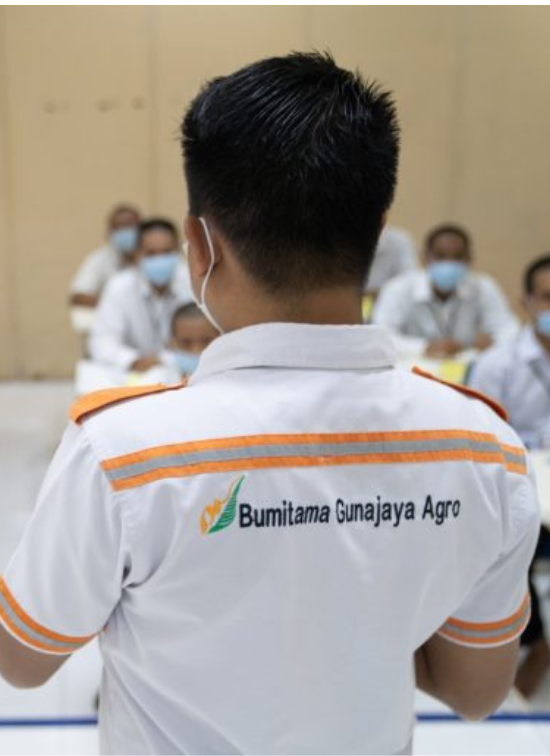
PT Bumitama Gunajaya Agro (BGA Group)
Company Profile
PT Bumitama Gunajaya Agro (BGA Group) is a leading Indonesian palm oil producer established in 1996. The group focuses on the primary activities of oil palm cultivation, harvesting, and processing fresh fruit bunches (FFB) into Crude Palm Oil (CPO) and Palm Kernel (PK). Publicly listed on the Singapore Exchange (SGX) since 2012, BGA Group manages an extensive portfolio of plantations across Central Kalimantan, West Kalimantan, and Riau, positioning itself as a major player in the global agribusiness sector.
Background & Challenges
The palm oil industry is navigating rapid technological shifts, evolving sustainability standards, and market volatility. For BGA Group, the primary challenge was the absence of a standardized framework to measure and develop talent consistently across its diverse operations. A redefined internal competency framework was needed to support its long-term Human Capital Strategy.
The Plan (Sasaran Project)
- Standardized Talent Language: Design a comprehensive Competency Dictionary for the entire organization.
- Framework Development: Establish a clear set of Core, Managerial, and Functional Competencies with robust behavioral indicators.
- Strategic Alignment: Align the new competency framework with BGA Group's corporate values and long-term business Roadmap.
The Approach (Metodologi)
To ensure the framework was both academically sound and practically applicable, we utilized a multi-dimensional methodology:
- OCAI & Job Analysis: Analyzed current organizational culture and performed an in-depth review of existing roles to map specific competencies.
- 5-Level Proficiency Scale: Developed a detailed scale for each competency, ranging from basic awareness to expert/strategic mastery.
- Stakeholder Engagement: Facilitated Focus Group Discussions (FGD) with Subject Matter Experts (SMEs) and leadership to validate functional requirements.
The Results & Strategic Insights
- Clarity in Performance Management: Managers now have objective behavioral indicators to evaluate team performance accurately.
- Unified Talent Strategy: A cohesive system that integrates Recruitment, Assessment, and Succession Planning under one Framework.
Case study
Developing a Comprehensive Competency Dictionary
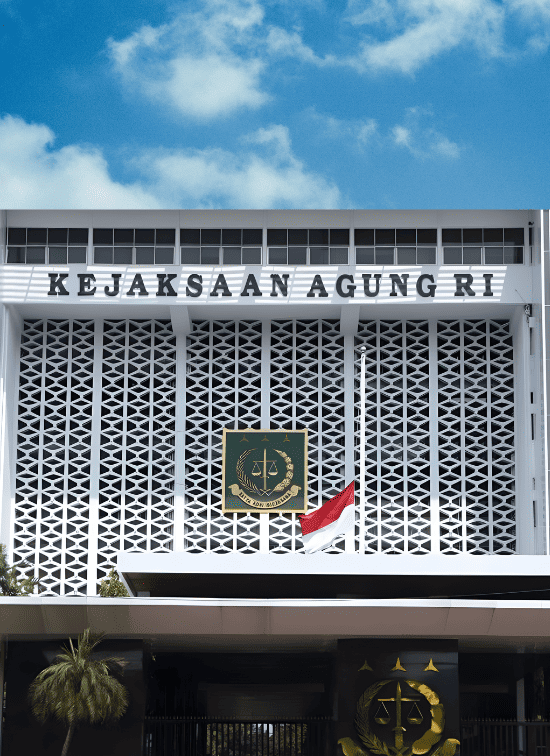
The Attorney General’s Office of the Republic of Indonesia (Kejaksaan Agung RI)
Company Profile
The Attorney General’s Office of the Republic of Indonesia (Kejaksaan Agung RI) is the central law enforcement institution under the executive branch. It oversees prosecution offices nationwide and holds authority in criminal prosecution, specific investigations, as well as state representation in civil and administrative matters.
Background & Challenges
As a key pillar of the national legal system, Kejaksaan Agung RI needed to ensure its workforce could respond to increasing legal complexity. The main challenge was the absence of a standardized talent language to define competencies and behaviors across diverse legal and administrative roles, limiting consistency in human capital management.
The Plan (Sasaran Project)
The initiative focused on developing a comprehensive Competency Dictionary as the foundation for modern human capital practices:
- Talent Management Foundation: Establish a robust basis for recruitment, development, and performance management.
- Strategic Alignment: Align the defined competencies directly with current organizational needs and future strategic goals.
The Approach (Metodologi)
The framework was developed through a highly structured and evidence-based approach:
- Behavioral Event Interview (BEI): Conducted to accurately identify high-performance behaviors from top talents.
- STAR Framework: Utilized to capture and document measurable behavioral indicators.
- 5-Level Proficiency Scale: Developed to provide clear, leveled competency progression for each role.
- Validation Workshops: Facilitated rigorous reviews with key stakeholders across various functions to ensure accuracy.
The Results & Strategic Insights
- Unified Competency Dictionary: Successfully implemented a single, standardized talent language across the institution.
- Comprehensive Coverage: The framework comprehensively covers all major functions, including training, intelligence, administration, supervision, civil, and criminal divisions.
- National Implementation: The standardized competencies are successfully mapped and applicable down to regional offices nationwide.